
Health & Fitness App Industry Report — Weekly Digest
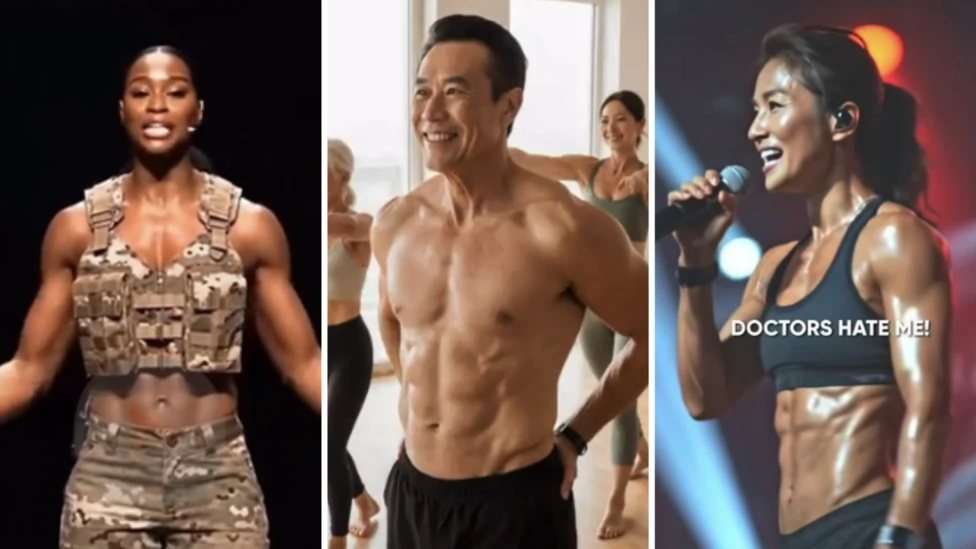
Welcome to the first issue of HookRadar Weekly Digest, a new format where our AI research agent breaks down what is happening inside a specific market: paid ads, official social accounts, creator placements, and organic trends.
We decided to start with health & fitness apps because this category is one of the most aggressive in performance marketing. A recent BBC piece about AI fitness instructors and unrealistic AI-generated body transformations also caught our attention.
The article captured something many people in the industry have been feeling for a while: fitness ads are full of synthetic bodies, fake-looking instructors, miracle transformations, and promises that feel a little too clean to be real. So we wanted to check what actually happened after that.
Did apps stop using AI-generated creative? Did the market move away from unrealistic transformation ads? Or did performance teams simply find better ways to package the same mechanics?
We looked at a small watchlist of fitness apps: BetterMe Men, Mad Muscles, Zing Fitness Coach, JustFit, Muscle Booster, and related organic content around the same category. This is not a legal audit or a scientific study. It is a market read for people who make ads, run social, or want to understand what is actually working right now.
TL;DR: AI-generated ads did not disappear. They are becoming labeled, more polished, and more careful.
1. Paid ads: same old promise, much better packaging
The paid ads did not suddenly become less aggressive. The old fitness-app promise is still everywhere: 7 days, 14 days, 28 days, 30-day transformation, no equipment, short daily workouts, personalized plan. None of this is new. These lines have been around for a long time because, apparently, they still work.
What changed is the packaging. The first big shift: apps are now starting to put AI-generated disclaimers directly inside the creative. That feels like the first real market response to the AI-fitness backlash. The category is not stopping. It is learning how to keep using AI bodies, AI scenes, AI voiceovers, and AI-generated formats with a visible safety label attached.
BetterMe Men: song-led scale and live-event hooks
BetterMe Men is probably the clearest example of how this market is evolving. One of their strongest current formats is a rooftop calisthenics video: a fit man training on a mat, a clean city view behind him, animated muscle diagrams on screen, and an app UI reveal at the end.
The script is familiar: 15-minute challenge, start Monday, reduce belly fat, get stronger, feel more confident, know exactly what to do. Nothing revolutionary there.
But the creative works because the wrapper is better. The body looks aspirational, the setting looks expensive enough, and the muscle-diagram overlay turns a simple workout into something that feels structured.
The real hook may not be the exercise — it is the song. This does not look like a tiny experiment anymore. BetterMe has multiple variations of similar workout videos with different melodies, and the strongest one looks like a format they are trying to scale. For a category that often uses generic AI voiceovers, this is important: music is becoming part of the performance system, not just background noise.
The second BetterMe format is more direct: a shirtless man in a home gym, a clear summer/beach-body promise, then a generated exercise sequence and app UI.
The hook says: do this every day for 10 minutes, and by August you will not feel the need to cover up at the beach. We start Monday. You in?
That line is not new. BetterMe has been using versions of this structure for months. What is new is the production layer around it: better male voiceover, cleaner AI scenes, clearer app demo, and now visible disclaimers around generated content and expected results. This is the pattern: old conversion logic, safer packaging.
BetterMe is also testing newer openings:
A football / stadium hook around the idea: “The easiest way to shock everyone who hasn't seen you in months.” This is especially timely because FIFA World Cup 2026 is happening right now. The crowd energy, stadium noise, and football context give the ad a live cultural trigger before it moves back into the usual workout transformation frame.
A more practical gym-anxiety hook BetterMe is also testing: “From 15th June no more guessing at the gym. This plan will tell you exactly what to do.” This is less about miracle transformation and more about removing confusion.
Mad Muscles: military workouts, Tai Chi walking, and better AI bodies
Mad Muscles is pushing a different world. The strongest repeated patterns are military workouts and Tai Chi walking. The military angle gives the ads instant identity: discipline, structure, outdoor training, tactical clothes, bodies in excellent shape.
The AI generation quality has improved a lot compared with earlier fitness creatives. The people look more believable, the movement is cleaner, and the visual style feels less like an obvious experiment.
Again, the label matters. Generated videos now often include a disclosure. The market is adapting to pressure without abandoning the asset type.
Mad Muscles is also testing Tai Chi walking as a low-impact alternative to running. One useful hook is: “You have to stop running.” The opening shows a generated overweight man, then moves into a creator-style transformation insert where the same person appears leaner.
This is a smart angle because it is not just another “get ripped in 28 days” claim. It attacks a behavior people already know — running — and replaces it with something that feels easier, safer, and more novel.
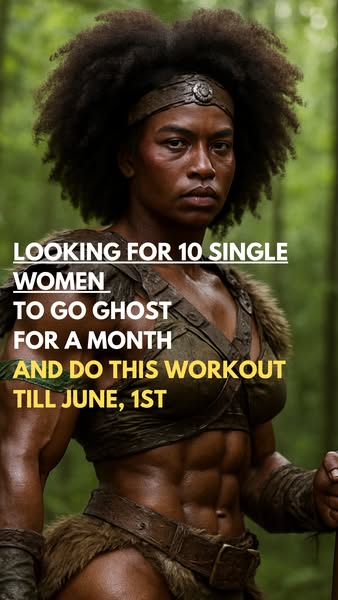
They also test a lot of static creatives, especially for women. The stills are not as interesting editorially, but they matter commercially: the brand is clearly not betting only on one hero video format.
Muscle Booster: summer settings are doing real work
Muscle Booster is leaning into seasonality. The paid creatives use summer scenes: beach, pool, outdoor bodies, age comparison, “twins” style transformation, and fully generated people in aspirational settings.
This is not subtle, but it is timely. If you are running health and fitness ads in June, the beach is not just a background. It is the emotional deadline. Summer gives the same transformation claim a reason to exist right now.
JustFit: lazy workout still scales, but it is not the freshest story
JustFit is still strong in the “lazy workout” world: couch, bed, phone, women-focused routines, no equipment, workout-game interface, low-friction setup.
The reason it works is obvious: it removes shame and effort from the first step. The user does not need to become a gym person. She just needs to follow a simple prompt. But this is also one of the most familiar patterns in the category now. Useful to benchmark, not the most interesting new signal.
Zing: paid looks quieter, social looks louder
Zing is the odd one out. In the paid data we looked at, the active creative set looks less fresh than the others. That does not mean the brand is inactive. It looks more like Zing is putting a lot of energy into partnerships and social, especially around PSG, rather than running the same AI-heavy paid creative factory as BetterMe or Mad Muscles.
That makes Zing more interesting in the social section than in paid ads.
Paid ads takeaway
The market answer is not: “AI fitness ads are over.” The answer is closer to: “No, but they adapted.”
What still works: short daily challenges; beach and summer deadlines; clear calendar starts like Monday / June 15; app UI proof at the end; transformation language; low-friction alternatives to hard workouts.
What is changing: AI-generated disclaimers appearing inside creatives; AI visuals getting better; voiceovers more polished and more masculine in male-focused ads; song-led workout formats being scaled, not just tested; seasonal and live cultural contexts (FIFA World Cup 2026) layered on top of old scripts; softer hooks like “no more guessing at the gym,” not only “lose belly fat fast.”
If you make ads in this category, the opportunity is not to invent a completely new promise. It is to find a less tired wrapper around a promise that the market has already proven.
2. Official social accounts: the best posts are not product demos
Official social accounts are usually less interesting than paid ads. Most brand pages still post the expected stuff: workout tips, gym mistakes, consistency reminders, app CTAs, “link in bio.” Useful, but rarely surprising. The strongest exception is Zing.
Zing’s best official Instagram content is built around PSG, Laure Boulleau, and football challenge formats. These posts do not start with “download our AI coach.” They start like sports entertainment: a player, a challenge, pressure, a bit of chaos, and then the app enters as the thing powering the workout.
The best Zing posts reached serious scale, with multiple PSG challenge videos around 12M+ plays. The hook is not fitness advice. The hook is: can this recognizable person survive the challenge? That is a much stronger social format than “here is an exercise.”
BetterMe Men is doing something more native to gym Instagram. Their top official posts are simple, familiar, and engagement-driven. One of the best examples is a gym-background challenge: “You have to remove 3” from a list like sex, gym, alcohol, love, money, social media, music, friends. It is not a product post at all. It is comment bait, but good comment bait: masculine, gym-adjacent, easy to answer, slightly provocative.
Their second useful format is more practical: “Upper body workout mistakes.” Two men in a gym, wrong vs right form, clean overlay, saveable content. So BetterMe’s official social is doing two jobs: engagement bait for reach, and mistake-correction tutorials for saves.
Mad Muscles is much smaller on official social, but the patterns are clear. Their better posts are built around seasonal outdoor fitness and male discipline. One video says, “Workouts are about to look like this again,” with a shirtless man training outside. Another starts with the very relatable morning struggle: did not want to get up, got up anyway. The tone is less “hack your body” and more “become the kind of man who shows up.” That is a useful contrast with their paid ads, which are much more aggressive and AI-heavy.
Muscle Booster is doing the most social-native content outside of Zing. Their top official post is not a workout tutorial. It is a relatable running sketch: two people bump into each other, AirPods get mixed up, and the joke is about discovering someone else’s chaotic music taste. That one did around 1M plays, and the reason is obvious: it is a fitness-adjacent joke, not a fitness lecture. They also have a giant-water-bottle joke and a mom-working-out-amid-chaos format. Both are simple, relatable, and built for shares.
This is probably the most important SMM lesson: the official posts that work best often do not look like app marketing. They look like a sports challenge, a gym debate, a wrong-vs-right tutorial, a relatable running joke, a morning discipline moment, a seasonal outdoor workout. JustFit is less visible in the official-social data we looked at. Their strongest signal is clearly in paid ads, not organic brand content.
So the SMM takeaway is simple: paid ads sell the promise, but social needs a format. Zing has sports challenges. BetterMe has gym engagement bait and mistake tutorials. Mad Muscles has discipline and outdoor masculinity. Muscle Booster has relatable fitness-adjacent sketches. The brands that do best on official social are not explaining the product every time. They are building repeatable moments people can watch even before they care about the app.
3. Creator placement: Mad Muscles is the only one worth calling out
The creator-placement layer is still uneven in this niche. A few apps appear to test creator-style content, but Mad Muscles is the one with the clearest signal. They seem to be doing two things: buying or arranging posts from individual UGC creators, and seeding product-placement videos through smaller or newer accounts, then promoting some of them hard.
One example is a post from cado2go with roughly 4M views in a few days. The video does not feel like a classic ad at first. It opens as a morning routine: 6:30am, this is not a workout, low-friction movement, Tai Chi walking, then Mad Muscles appears as the plan behind it.
The interesting part is not only the view count. It is the format. It sells fitness without selling “fitness.” No gym. No hard training. No shame-heavy transformation before/after. No bodybuilder instructor. Instead, the promise is: you can do something small, calm, and repeatable before the day starts.
That maps neatly to the Tai Chi walking paid ads. The paid side says “stop running.” The organic placement says “this is not a workout.” Same strategic direction: escape from hard fitness. Among the apps we looked at, it is not everywhere — but it points to where paid creative may go next: less direct product demo, more embedded behavior.
4. Broader organic trends: what fitness ads can steal from TikTok
The broader TikTok organic layer is more useful as a creative input than as a list of competitors. The best current organic videos are not selling a 28-day transformation. They are selling one small, specific action. Examples: “Build muscle with a chair.” Beginner upper-body workout at home. Wall abs workout. “Bad posture? Do this exercise.” “Huge triceps, no elbow pain.” “I tried this viral exercise.”
The lesson for marketers is simple: organic fitness wins by being concrete. A chair is more clickable than “home workout.” A wall is more clickable than “abs routine.” Elbow pain is more clickable than “triceps tips.” Bad posture is more clickable than “mobility.” Organic hooks also tend to make the user feel smart, not guilty — paid ads often say “you are not fit enough yet,” while organic winners say “here is one clever fix you can use today.” The strongest organic creatives in this space attach themselves to a specific object, body part, or daily complaint, and they almost always feel like advice from a peer, not pressure from a brand.
What we would test next
If we were running a creative sprint for a men’s fitness app next month, we would test: (1) Song-led workout ads — use BetterMe’s rooftop format as reference, treat music as a real creative variable. (2) “No more guessing” gym confidence ads — less saturated than beach-body transformation. (3) Low-impact alternatives to running — Mad Muscles’ Tai Chi walking direction creates a clear villain. (4) Seasonal AI scenes with explicit labels — make the AI label visible and the claim less reckless. (5) Organic-style object workouts — chair, wall, towel, doorway, backpack. (6) Social formats before product formats — challenge, debate, mistake correction, relatable joke, creator placement.
Final read
The health and fitness app market did not stop using AI-generated creative. It got better at using it. The rough AI body-transformation ads are being replaced by cleaner scenes, better voices, stronger music, clearer app demos, and visible disclaimers. The promise is still aggressive, but the wrapper is becoming more careful.
For marketers, that is the real takeaway. AI creative is not a phase that disappears after criticism. It becomes a production layer. The teams that win will be the ones that understand which parts of the old performance machine still work, and which parts need a more believable frame.
We are going to make these market breakdowns a regular HookRadar format. Want us to analyze your niche next? Comment with the category, competitor set, or question you want us to investigate.