
AI Photo App Marketing in 2026: How Glam AI, Remini, Photoroom, Mojo & Instories Win With Ads
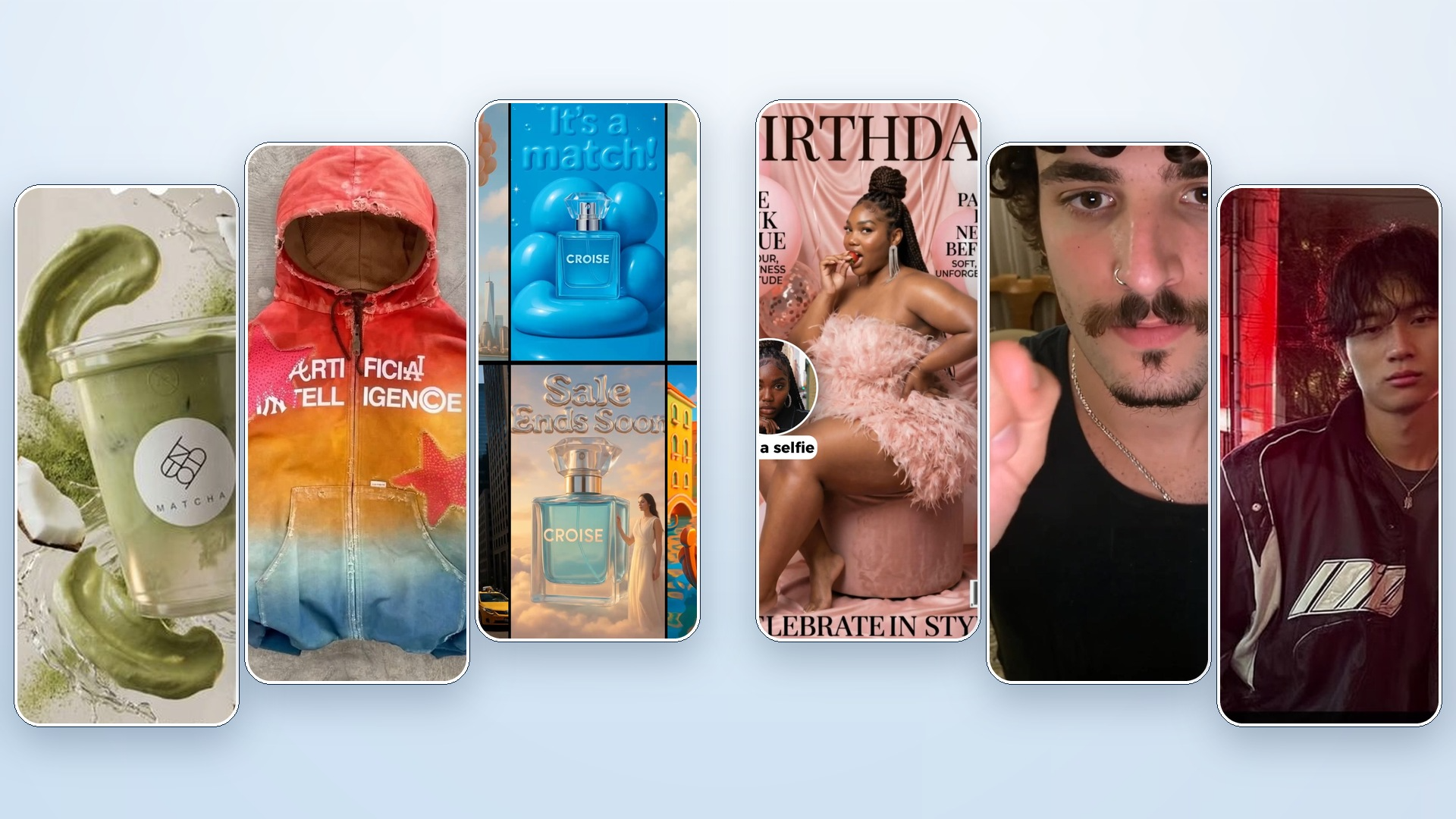
Every week, HookRadar analyzes paid ads, official social posts, creator campaigns, and organic trends to uncover the creative patterns driving growth across fast-moving markets.
This report focuses on AI photo and video apps, but the real story is not only about editing software. It is about how an entire category is changing what it sells.
After reviewing campaigns from Instories, Mojo, Photoroom, Remini, Glam AI, Prequel, and related organic examples, one trend stood out: the best-performing ads rarely sell features anymore. They sell a finished outcome — a polished product photo, a week of social content, a viral aesthetic, or a new identity.
TL;DR: the business side of the market is winning with proof-first workflow ads. The consumer side is winning with status, trend participation, and instantly recognizable before/after moments.
This is not a full map of every use case each app is buying against. Most photo and video products run several directions at the same time: reels, templates, ecommerce visuals, AI avatars, filters, product photos, social content, and identity edits.
In this digest, we are highlighting the directions that looked especially interesting in the ads and organic examples we reviewed: formats with clear repetition, strong packaging, fresh hooks, or useful creative patterns.
1. AI photo app ads: two markets hiding inside one category
The paid ads split into two clear lanes. Instories, Mojo, and Photoroom mostly talk to people who need content for work: small brands, creators, sellers, local services, and social teams. Their promise is practical: stop editing, stop shooting, stop wasting time, get a finished asset.
Glam AI, Remini, and Prequel are playing a different game. They are closer to fashion, sports fandom, beauty, identity, and social status. The promise is not productivity. It is: upload one selfie and become the version of yourself that belongs in the trend.
2. One strong direction: making the editor disappear
Instories: one visible direction is AI reels and editing relief
Instories has one of the cleanest B2B-ish angles in the dataset: your clips are already enough. The creative starts with ordinary raw footage from a dental office and quickly turns it into a finished social reel with AI.
That is a much sharper promise than 'make videos faster.' It removes guilt. You do not need a videographer, a social media manager, or a CapCut timeline. You already have the material; the app just packages it.
The more aggressive variation says 'CapCut is dead.' The point is not literally that CapCut disappeared. The point is that manual editing is becoming the enemy. The old competitor is not another app. It is the timeline.
Mojo: one visible direction is output multiplication
Mojo is strongest when it shows multiplication. One product image becomes many motion creatives. That is a great paid-ad mechanic because the viewer understands the value before the app has to explain anything.
The hook 'STOP EDITING REELS LIKE THIS' works because it attacks the current workflow, not the user. The ad is basically saying: your product is fine, your editing process is the bottleneck.
This is a useful pattern for any AI creative tool: do not sell the model, sell the number of usable outputs a marketer can get from one input.
Photoroom is the most literal of the workflow players, and that is not a weakness. It shows bad product photos, messy beds, imperfect shoots, and then gives the viewer a clean product visual. For ecommerce, this is exactly the right level of specificity.
3. Another strong direction: instant identity, not editing
Glam AI: trend participation as a product
Glam AI is the most trend-native player in the set. Its ads often feel like a creator showing how to join a visual meme, not a software company demoing an editor.
The stadium-cam / sports-card creative is a good example. Glam started pushing this when the stadium-cam look became recognizable as a trend; the ad makes the app feel like the fastest path into that format.
The best part is that the app does not need a long feature walkthrough. The value is the final identity: athlete, main character, birthday cover star, football edit, cinematic version of you.
Remini: fast personal transformation as an acquisition hook
Remini still leans into the most direct personal-transformation hooks. Muscular body edits, hairstyle try-ons, baseball cards, polished portraits. None of this is subtle, but it is instantly legible.
The reason these hooks keep showing up is that the viewer understands the question in one second: what would I look like if I changed this one thing?
The risk is obvious too. The more the category moves into body fantasy, the more platforms and users will scrutinize it. We already saw this dynamic in health and fitness ads. Photo apps may end up facing the same pressure.
Prequel sits somewhere between a filter app and an aesthetic education account. Its paid examples are less shocking than Glam or Remini, but the direction is clear: sell the look, not the editor. G7X, flash, digicam, early Tumblr, blurry night-out photos, viral fonts. These are cultural shortcuts, not feature categories.
4. Official social: Glam is the trend lab, Prequel is the aesthetic manual
The official social accounts are more revealing than the paid ads because they show how each team thinks before a format gets fully performance-packaged.
Glam AI turns World Cup attention into a meme template
This post should not be read as random sports content. It is a World Cup 2026 timing play: take a face everyone in football recognizes, distort it just enough to feel meme-native, and connect the app to the moment people are already talking about.
That is why Glam's official social is useful to watch. It behaves less like a brochure and more like a fast trend desk: football faces, stadium-style identity edits, surreal ASMR, cats in claw machines, and other weird visual formats that can be tested before they become paid hooks.
The paid ads then turn the most understandable pieces into cleaner acquisition assets. The lesson for marketers: if your paid team is starving for hooks, the social feed should be a testing lab for cultural timing, not a repost channel.
Prequel teaches people what to want
Prequel's social is less chaotic and more educational. It teaches users the name of the look they already saw somewhere else.
That is a powerful organic pattern. 'How to get this G7X look' or 'where influencers get these viral fonts' works because the viewer starts with a tiny social insecurity: I know the look, but I do not know how to make it.
For photo and video apps, this may be more useful than generic inspiration content. The hook should name the visual language people are already trying to copy.
5. Broader organic: the best hooks are tiny and painfully specific
Outside the official brand accounts, the strongest organic posts are usually not big brand-level promises. They are tiny use cases: fix one face in a group photo, make an iPhone photo look like a Canon G7X, restore an old photo in 4K, turn one product shot into a commercial-looking video.
This is the biggest gap between paid and organic. Paid still often says 'create better content faster.' Organic says 'here is the exact thing you were trying to fix tonight.' The second version is easier to save, share, and immediately understand.
6. Key takeaways & what to test next
- Sell the outcome, not the feature. Show the finished result instead of explaining AI.
- Attack the workflow, not competitors. Position manual editing as the real problem.
- Multiply the output. One photo becomes multiple ads, videos, or social posts.
- Sell identities, not edits. Package recognizable looks and trends, not filters.
- Use specific use cases. “Fix one bad face” beats “edit photos with AI.”
- Turn organic trends into paid ads. Test cultural moments and viral aesthetics organically, then scale the winners.
The biggest lesson: people do not buy editing. They buy the fastest path to the result they want.
Keep reading
HookRadar can now plug directly into your AI tools through MCP, so teams can bring competitor ads, organic posts, and creative signals into their own research workflows.
- Previous report: Health & Fitness app industry breakdownHow BetterMe, Mad Muscles, Muscle Booster, and Zing win paid and organic.
- All HookRadar weekly digestsBrowse every category breakdown from our AI research agent.
- HookRadar MCP for AI toolsPull competitor ads and creative signals straight into your AI workflows.